Where the research is now

Dhageyso — listen

4 clips generated by the project's research models, each labelled with the model and the recordings its adapter learned from. Every clip is AI output, not a recording, and none of the source recordings is served here. The models are work in progress: they have learned the timbre and melodic shape of the tradition, and they still add noise and drift from the scale at times. The numbers under each clip are from the project's own scorer, unedited.

Selection: the 4 clips below are the top 4 of 16 clips the model produced for held-out prompts, ranked by an automatic score (pitch conformity plus trackable melody) — a curated selection, not a random draw. The source recordings are not distributed.

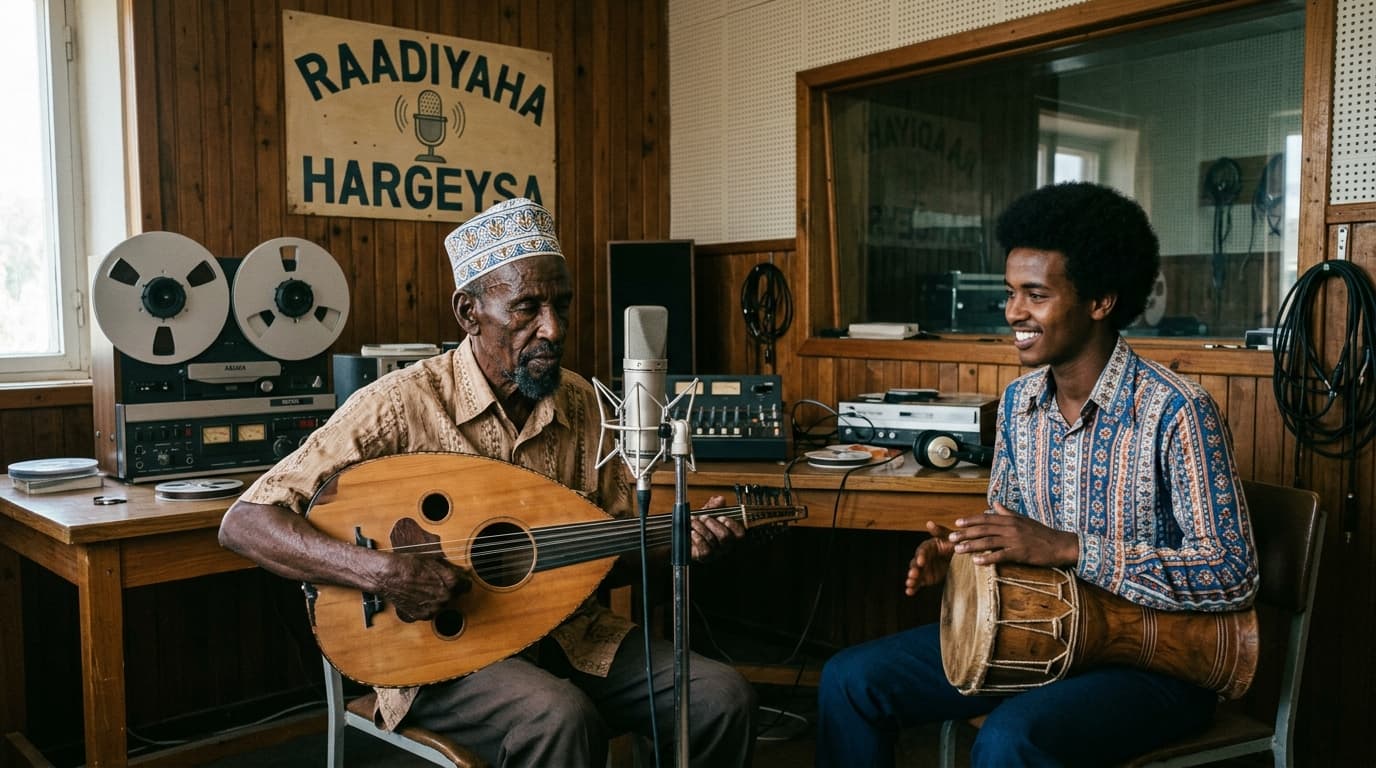
Radio Hargeisa (Raadiyaha Hargeysa) archival studio session with Kaban master and apprentice

Raadiyaha Hargeysa · Cradle of the Balwo & Qaraami Masters

  1. Solo oud, 110 BPM, rooted on G

    AI output

    Prompt: qaraami, Somali traditional song, led by the oud (kaban), solo oud, moderate at 110 BPM, pentatonic melody rooted on G, studio recording, clean, solo instrumental, no vocals

    PCS
    0.974
    Voiced
    77 %
    Band SNR
    18.9 dB
    Length
    30 s

    AI model output — generated, not a recording · ACE-Step 1.5 xl-sft (4 B) · clean-oud LoRA (v3_ace_xlsft, final), trained on isolated oud stems from one performer’s own recordings in a private collection, 5.7 hours; no archival or internet audio

  2. Solo oud, 110 BPM, rooted on C

    AI output

    Prompt: qaraami, Somali traditional song, led by the oud (kaban), solo oud, moderate at 110 BPM, pentatonic melody rooted on C, studio recording, clean, solo instrumental, no vocals

    PCS
    0.901
    Voiced
    84 %
    Band SNR
    14.5 dB
    Length
    30 s

    AI model output — generated, not a recording · ACE-Step 1.5 xl-sft (4 B) · clean-oud LoRA (v3_ace_xlsft, final), trained on isolated oud stems from one performer’s own recordings in a private collection, 5.7 hours; no archival or internet audio

  3. Solo oud, 107 BPM, rooted on E

    AI output

    Prompt: qaraami, Somali traditional song, led by the oud (kaban), solo oud, moderate at 107 BPM, pentatonic melody rooted on E, studio recording, clean, solo instrumental, no vocals

    PCS
    0.983
    Voiced
    68 %
    Band SNR
    13.8 dB
    Length
    30 s

    AI model output — generated, not a recording · ACE-Step 1.5 xl-sft (4 B) · clean-oud LoRA (v3_ace_xlsft, final), trained on isolated oud stems from one performer’s own recordings in a private collection, 5.7 hours; no archival or internet audio

  4. Solo oud, lively at 150 BPM, rooted on G

    AI output

    Prompt: qaraami, Somali traditional song, led by the oud (kaban), solo oud, lively at 150 BPM, pentatonic melody rooted on G, tuned 41 cents flat of A440, studio recording, clean, solo instrumental, no vocals

    PCS
    0.983
    Voiced
    67 %
    Band SNR
    14.6 dB
    Length
    30 s

    AI model output — generated, not a recording · ACE-Step 1.5 xl-sft (4 B) · clean-oud LoRA (v3_ace_xlsft, final), trained on isolated oud stems from one performer’s own recordings in a private collection, 5.7 hours; no archival or internet audio

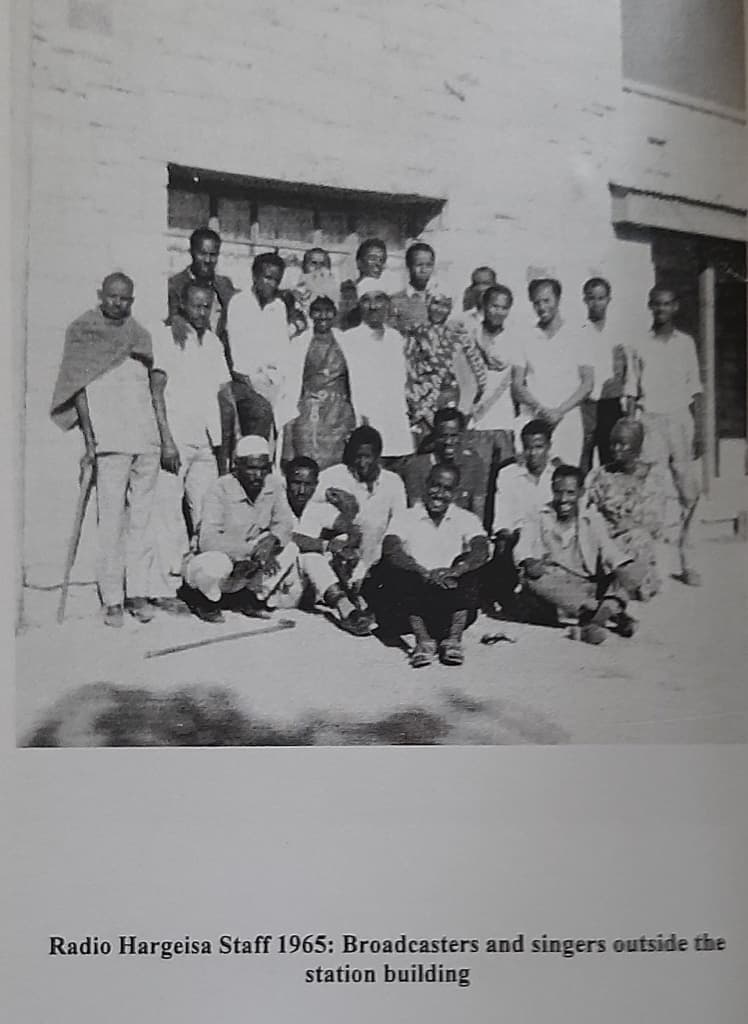
Radio Hargeisa Staff 1965: Broadcasters and singers outside the station building

Historic Archive · 1965

Radio Hargeisa (Raadiyaha Hargeysa)

Broadcasters, poets, and singers outside the station building in 1965.

Founded in 1943, Radio Hargeisa is the historic birthplace of modern Somali music, the Balwo, and classical Qaraami song. It is where pioneers like Cabdullaahi Qarshe, Cabdi Sinimo, Cumar Dhuule, Axmed Gacayte, Maxamed Mooge Liibaan, and the Walaalo Hargeysa troupe first set oral poetry to the strings of the Kaban and magnetic tape.

During the 1988 bombardment, courageous sound engineers and radio staff buried thousands of reel-to-reel master tapes underground in protective caches to save the musical memory of the nation. Those rescued tapes are the foundational bedrock of this archive.

Raadiyaha Hargeysa · Hal-abuurka & Fanaaniinta

Pioneers & Masters of Radio Hargeisa

The foundational composers, lyricists, and Kaban virtuosos whose broadcasts and studio recordings in Hargeisa created the modern Somali musical canon.

Cabdullaahi Qarshe

1924–1994

Aabaha Fanka Soomaaliyeed · Father of Somali Music

Pioneering composer, Kaban (oud) virtuoso, and founder of the Walaalo Hargeysa ensemble (1953). Qarshe was the first to marry Somali oral poetry to structured modern melodies and Kaban strings at Radio Hargeisa.

Historical Legacy: Composed iconic national awakening anthems such as "Aqoon La'aan Waa Iftiin La'aan" and established the foundations of modern Somali orchestral arrangement.

Cabdi Deeqsi "Sinimo"

1920s–1967

Aabaha Balwada · Creator of the Balwo

The musical genius and poet who invented the Balwo in 1943 near Borama and Hargeisa. With his historic song "Balwooy! Hooy Balwooy", Sinimo sparked the acoustic revolution that birthed modern Somali popular music.

Historical Legacy: Created the compact lyric form and emotional cadence that Radio Hargeisa broadcast across the Horn of Africa, giving rise to the entire Qaraami tradition.

Cumar Dhuule Cali

1941–2003

Ustaad Qaraami · Master of the Kaban

Legendary Kaban virtuoso and vocalist celebrated for his hypnotic "riftoon" (intricate finger-picking) style. Dhuule was a mainstay of Radio Hargeisa broadcasts for over three decades.

Historical Legacy: Recorded dozens of definitive classical Qaraami master takes at Radio Hargeisa, establishing the rhythmic and melodic benchmark used by our AI transcription models.

Maxamed Mooge Liibaan

1940s–1984

Master Vocalist, Poet & Kaban Virtuoso

A monumental figure in northern Somali culture, revered for his rich baritone voice, profound philosophical lyrics, and masterful self-accompaniment on the Kaban.

Historical Legacy: Recorded landmark Radio Hargeisa studio sessions including "Aamiinta Madaxayga", "Adduunyo", and "Maxaa Iga Galay Duunya Ba'an", influencing generations of musicians.

Axmed Gacayte

1948–1988

Pioneering Vocalist & Composer · Walaalo Hargeysa

One of the smoothest, most expressive vocal stylists of the golden age. Gacayte was a foundational member of the Walaalo Hargeysa movement and Radio Hargeisa broadcast team.

Historical Legacy: Penned and performed timeless northern classics such as "Dhulkayga" and "Jawaahir", preserving classical pentatonic modal scales on magnetic reel archives.

Walaalo Hargeysa (Hargeisa Brothers)

Est. 1953

Foundational Theatrical & Musical Troupe

The legendary ensemble formed in Hargeisa by Cabdullaahi Qarshe, Cali Sugulle Dun-carbeed, Barkhad Cas, Saxardiid Maxamed Jabiye, and Xuseen Aw Faarax. They created the first Somali musical plays.

Historical Legacy: Turned Radio Hargeisa into an acoustic epicenter of anti-colonial resistance, theatrical drama, and modern collective musical performance.

Sahra Axmed Jaamac

1956–2018

Vocal Legend & Radio Hargeisa Broadcaster

Among the most celebrated female vocalists in Somali history, Sahra Axmed rose to national fame through her crystalline vocal performances broadcast from Radio Hargeisa.

Historical Legacy: Recorded dozens of celebrated duets and solo ballads that defined northern popular song and inspired female musical participation across Somaliland.

The Tape Protectors of 1988

1988 Archival Rescue

Radio Hargeisa Sound Technicians & Custodians

During the 1988 aerial bombardment of Hargeisa, brave station staff and sound technicians risked their lives to preserve Somalia's recorded acoustic heritage from total destruction.

Historical Legacy: Heroically dismantled and buried over 12,000 reel-to-reel master tapes in underground metal drums beneath the earth, ensuring the musical memories of Qaraami survived for this archive.

Recordings

No recording is served on this site yet. The archive's source recordings are held for research: the archival cassette collection is research-only and never appears here, and the privately shared oud (kaban) collection waits for its written consent record before any of it is published. Rights-clear recordings will be listed in this section, each with its source stated, as they are cleared.

What the numbers mean

PCS (pentatonic conformity score): the share of voiced frames whose pitch sits within ±50 cents of a degree of the five-note scale fitted to the clip. Voiced: the share of frames with a confident pitch; a low value means long unpitched stretches, not silence. Band SNR: the clip's signal-to-noise ratio in the melody band; the adapters still add hiss, and this is the number that shows it. All three come from the same scorer used in the evaluation, not from listening.